Fashion That Works as Hard as You Do
Techwear was once the uniform of urban futurists and Gorpcore hikers—Gore‑Tex shells, chest rigs, tactical pockets. Now its DNA is quietly invading everyday fashion. Office trousers have hidden stretch waistbands. Blazers are water‑repellent. Chelsea boots have trail soles.
In 2025, performance isn’t a niche—it’s the new baseline.
A 2024 report by The NPD Group found that 41% of consumers in the US and Europe prefer clothing with “performance features” (stretch, moisture-wicking, weather resistance) for everyday wear, not just sports or outdoor activities.
Welcome to the era of everyday performance fashion: where techwear logic meets tailoring and streetwear.
Why We Want Our Clothes to Be Smarter
1. Hybrid Lifestyles Need Hybrid Wardrobes
The post‑pandemic lifestyle is fragmented: office days, WFH, hot desk spaces, evening events, and weekend trips all blend together.
> “People want trousers they can bike in, sit at a desk in, and wear to a bar without changing,” explains menswear consultant Christopher Morency.
This has driven demand for pieces that flex across:
- Commutes and weather changes.
- Casual and formal codes.
- Movement and polish.
2. Athleisure Grew Up
The 2010s were about leggings and hoodies invading daily life. Now that comfort is non-negotiable, we’re upgrading aesthetics.
McKinsey’s 2024 State of Fashion report notes that “smart casual” is the fastest-growing dress code category in global retail, especially in menswear.
3. Tech Is a Status Signal—Without Logos
Instead of visible logos, fabrics and features are becoming the new flex:
- “These trousers are stain‑resistant and four‑way stretch.”
- “This coat is windproof but looks like wool.”
In a quiet-luxury era, tech function reads as informed, not flashy.
Key Features of Everyday Performance Fashion
The best performance pieces disappear into your outfit—but you feel the difference.
1. Elevated Stretch
Not shiny jegging stretch, but:
- Four‑way stretch suiting.
- Hidden elastic panels in waistbands.
- Knit blazers that hold shape.
Brands like Lululemon, Aime Leon Dore x New Balance, A.P.C., and Uniqlo are all investing in fabrics that move with the body but still look sharp.
2. Weather Adaptive
Common examples:
- Water‑repellent trenches that feel like cotton.
- Breathable, wind-resistant overshirts.
- Sneakers with weatherized uppers and city‑appropriate silhouettes.
Searches for “waterproof blazer” and “tech trench coat” have risen steadily since 2022, according to Google Trends.
3. Seamless Storage
Cargo pockets are back, but low‑key:
- Interior zip pockets in blazers.
- Phone‑sized pockets stitched into side seams.
- Passport pockets in travel coats.
Function is integrated, not screamed.
The Style Codes: Techwear, Softened
Think of it as techwear with the volume turned down.
For Women & Femme Dressers
- Tailored ankle trousers with stretch and hidden zips.
- Minimalist parkas in cream, mocha, and slate.
- Sculpted knit dresses made from technical yarns.
- Sock sneakers pared back to look like sleek boots.
Influencers like Brittany Bathgate and TyLynn Nguyen show how to mix performance fabrics with minimalist silhouettes.
For Men & Masc Dressers
- Tech chinos that look like wool trousers.
- Overshirts in ripstop or weather-treated cotton.
- Minimal sneakers with trail soles.
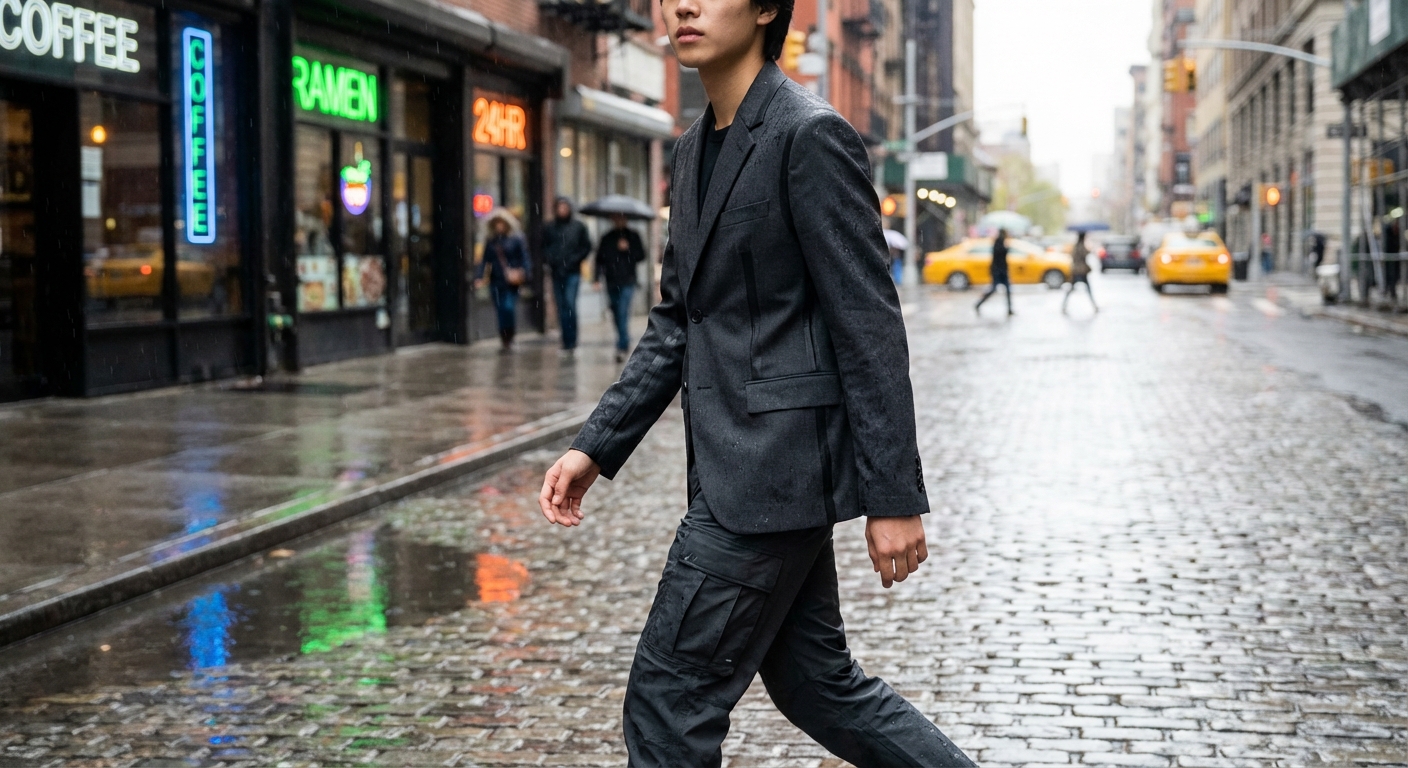
- Blazers made from recycled, wrinkle‑resistant blends.
Creators such as Karim @karbrane and Marques Brownlee (MKBHD) frequently wear hybrid tech-classic pieces: simple fits with hidden performance.
How to Build a Performance-Forward Wardrobe
You don’t need to dress like a sci‑fi extra. Start with 3–4 tactical upgrades.
1. Upgrade Your Commute Pieces
Look at what you wear when you’re “in transit”: commuting, traveling, running errands.
Great upgrades:
- Jacket: Swap a pure cotton bomber for a water‑repellent version.
- Pants: Replace at least one jean with stretch tech chinos.
- Shoes: Add one pair of weather‑resistant sneakers or hybrid boots.
2. Choose Technical Fabrics in Classic Shapes
Look for:
- Nylon‑blend trenches instead of pure cotton.
- Wool blends with added elastane.
- Recycled polyester linings with ventilation.
Pro tip: touch the fabric. Good tech fabrics feel dense and matte, not papery or shiny.
3. Apply the “3-Scenario Rule”
Before buying a performance piece, ensure you can wear it in at least three contexts:
- Commute + office + dinner.
- Travel + weekend + date.
- Gym commute + coworking + errands.
If it only makes sense in one scenario, it’s gear—not everyday fashion.
Sustainability: The Tension Inside Tech Fashion
Performance fashion leans heavily on synthetics. That raises environmental questions.
The Ellen MacArthur Foundation reports that synthetic fibers like polyester already account for over 60% of global fiber production. Performance fabrics can exacerbate microplastic pollution if not managed.
Brands are responding with:
- Recycled nylon and polyester (e.g., Patagonia, Arc’teryx Veilance).
- Durable design meant to replace multiple garments.
- Take‑back and repair programs.
Future‑minded shoppers can:
- Prioritize durability and repairability.
- Wash synthetics in microplastic‑catching laundry bags.
- Buy fewer, better tech pieces instead of trend‑driven synthetics.
Expert Takes: Where Performance Fashion Is Heading
1. Stealth Tech Tailoring
Menswear designer Kiko Kostadinov predicts a “suit renaissance” built on tech: structured shapes made from breathable, multi‑stretch fabrics.
Expect:
- Blazers you can roll in your bag.
- Trousers that handle bike commutes.
- Shirts that regulate temperature.
2. City Gorpcore 2.0
The first wave of Gorpcore was loud—hiking gear in bright colors. The next wave is urban‑coded:
- Neutral color palettes (stone, asphalt, charcoal).
- Smoother lines, fewer external straps.
- Pieces that pair with denim and tailoring seamlessly.
3. Embedded Smart Functionality
We’re still early, but watch for:
- Integrated RFID blocking in travelwear.
- Temperature-adaptive weaves.
- Minimalist smart textiles that don’t look “techy.”
Consulting firm BCG projects the smart textiles market could reach $9B by 2030.
Styling Tips: Making Performance Pieces Look Chic
- Balance texture: Match tech fabrics with natural ones (nylon trench + cotton tee + denim).
- Keep the palette tight: Performance fabrics often read busier; neutral colors streamline the look.
- Watch the shine: If one piece is slightly shiny (like a tech jacket), keep everything else matte.
- Limit visible zips and pullers: Let function be felt, not over-styled.
The Bottom Line
Everyday performance fashion is not about cosplaying a hacker or mountaineer. It’s about refusing to choose between function and aesthetics.
We’re dressing for days that run long, weather that’s unpredictable, and cities that demand movement. The smartest wardrobes of this decade will be quietly technical—outfits that look sharp but feel like a cheat code.