Why Everyone Is Suddenly Talking About Wardrobe Editing
The last five years of fashion have been defined by speed: micro-trends like coastal grandmother, indie sleaze, blokecore, and tomato girl summer rose and fell in weeks. TikTok’s algorithm rewarded constant novelty—and our closets absorbed the chaos.
Now the pendulum is swinging. Instead of hoarding aesthetics, style-obsessed shoppers are learning to edit. The new flex isn’t owning every trend; it’s having a wardrobe so tight and intentional that everything works together.
According to a 2024 report from Kantar, 63% of Gen Z respondents said they feel “overwhelmed” by the speed of fashion trends, and 54% say they’re “actively trying to reduce” impulsive clothing purchases.
Welcome to the era of the master wardrobe.
The Cultural Shift: Less Hauling, More Curating
Haul Culture Is Losing Its Shine
YouTube and TikTok haul videos used to drive massive views, but recent Social Blade data shows many creators are pivoting to “closet clean-out,” “styling one piece five ways,” and “no-buy month” content.
Fashion psychologist Shakaila Forbes-Bell notes that “decision fatigue” is a real issue: too many clothes make getting dressed harder, not easier.
Sustainability Is Moving From Guilt to Strategy
Consumers aren’t just hearing about climate impact—they’re feeling it. Reports from the Ellen MacArthur Foundation show that the average garment is worn 36% less than it was 15 years ago, while global clothing production has roughly doubled.
Instead of vague eco-guilt, the trend-conscious crowd is leaning into strategic minimalism—not necessarily owning less, but owning smarter.
What Is a “Master Wardrobe” in 2025?
It’s the evolution of the capsule wardrobe, but more flexible and personal.
Key characteristics:- Built around 3–5 core style identities (e.g., city minimal, sporty, romantic, office polish).
- 70–80% of items are interchangeable across these identities.
- Includes trend pieces, but they’re anchored by long-term staples.
- Backed by data and self-observation, not just Pinterest aesthetics.
Stylist and content creator Mina Le recently shared that she tracks her weekly outfits in a note app to see what she actually wears, calling it “the moodboard you can’t lie to.”
Step 1: Audit Your Real-Life Style (Not Your Dream Board)
Before you buy anything, you need data.
Track What You Wear for 14 Days
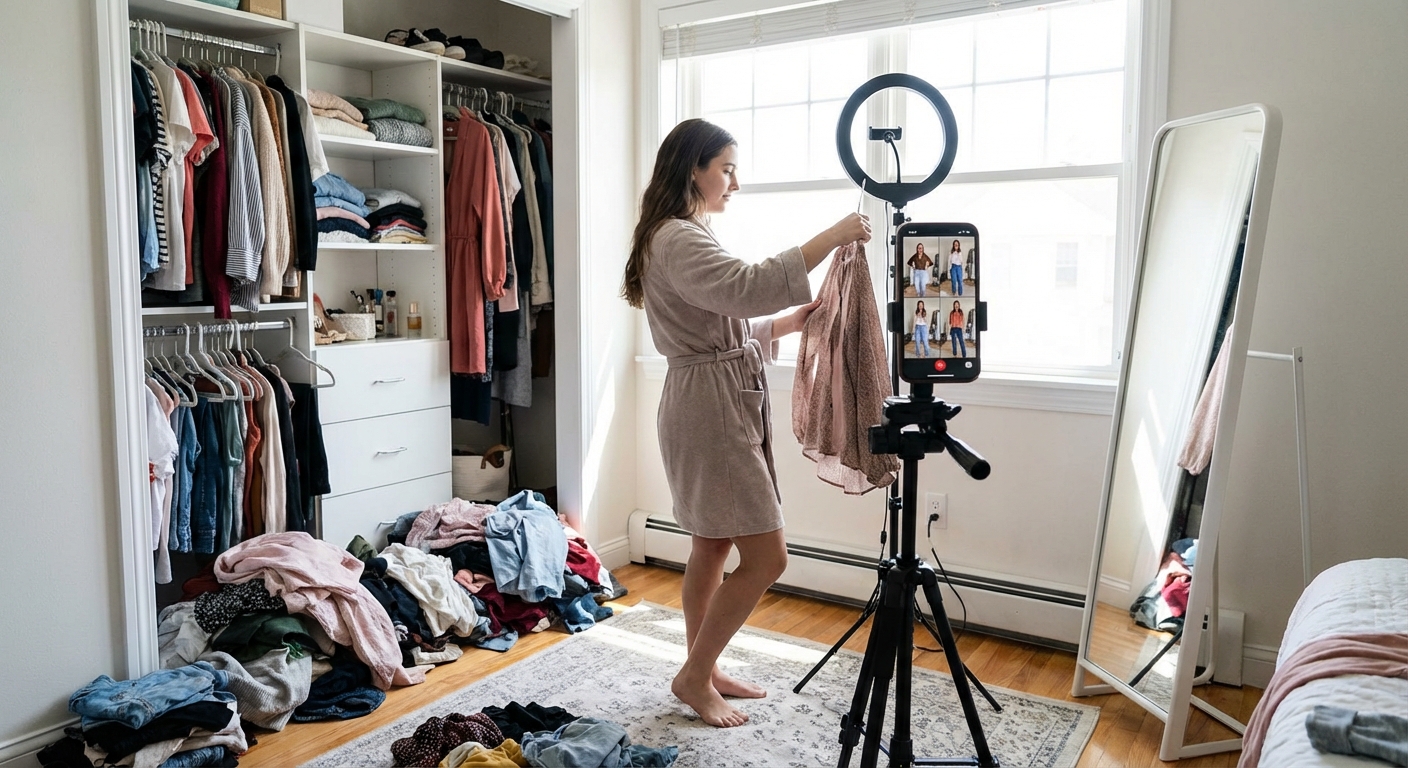
Use your phone:
- Snap a mirror selfie daily.
- Note where you went + how you felt in the outfit.
- After two weeks, look for patterns:
- Colors you repeat.
- Silhouettes you reach for.
- Shoes and bags doing most of the work.
Most people discover they rely on 20–30 items, even if they own 200.
Identify Your “Style Anchors”
Your anchors are the items that make outfits fall into place. Common examples:
- Wide-leg trousers in a neutral.
- One blazer that fits perfectly.
- A rotation of 2–3 shoes that go with everything.
- A daily bag.
These are master-wardrobe priorities.
Step 2: Map Your Lifestyle, Not Just Your Aesthetic
A 2024 survey by Rent the Runway found that 48% of users owned “too many special-occasion pieces” and “not enough everyday clothes that feel good.”
Break your week into percentages:
- Work or school
- Social / going out
- Home / errands
- Gym / movement
If 60% of your life is casual, 10% semi-formal, and 30% office, your closet should mirror that—not the fantasy of constant dinner parties.
Create a rough allocation, like:
- 50% elevated casual (jeans, nice knits, good outerwear).
- 25% workwear.
- 15% activewear.
- 10% event or occasion.
Step 3: Build a Style Matrix, Not a Capsule Prison
Instead of strict capsules, think in matrices: core pieces that multiply options.
Example: The 3×3 Matrix
Pick 3 of each:
- Tops: one structured shirt, one knit, one tee.
- Bottoms: tailored trouser, blue jean, dark jean or skirt.
- Layers: blazer, trench or bomber, cardigan.
You’ve already got 27 outfit combinations before adding shoes and accessories.
Influencer Matilda Djerf’s success with Djerf Avenue is largely built on this logic: a tight range of silhouettes styled dozens of ways.
Step 4: Upgrade Your “Style OS” With 5 Key Rules
Adopt light rules so shopping becomes faster and less chaotic.
Consider:
- Color Rule: Choose 2–3 base colors + 2 accent colors. Example: base (black, navy, white); accents (red, olive). Stick to these 80% of the time.
- Silhouette Rule: If the top is oversized, the bottom is tailored—or vice versa.
- Fabric Rule: Prefer natural or blended fabrics for anything that touches skin.
- Purchase Rule: Only buy if it styles with 3 pieces you already own.
- Duplication Rule: If you already own a similar item you don’t wear, figure out why before buying another.
Fashion creator Allison Bornstein popularized the “Wrong Shoe Theory”—using shoes slightly unexpected for the outfit—to keep edited wardrobes from feeling stale.
Step 5: Editing, Not Decluttering
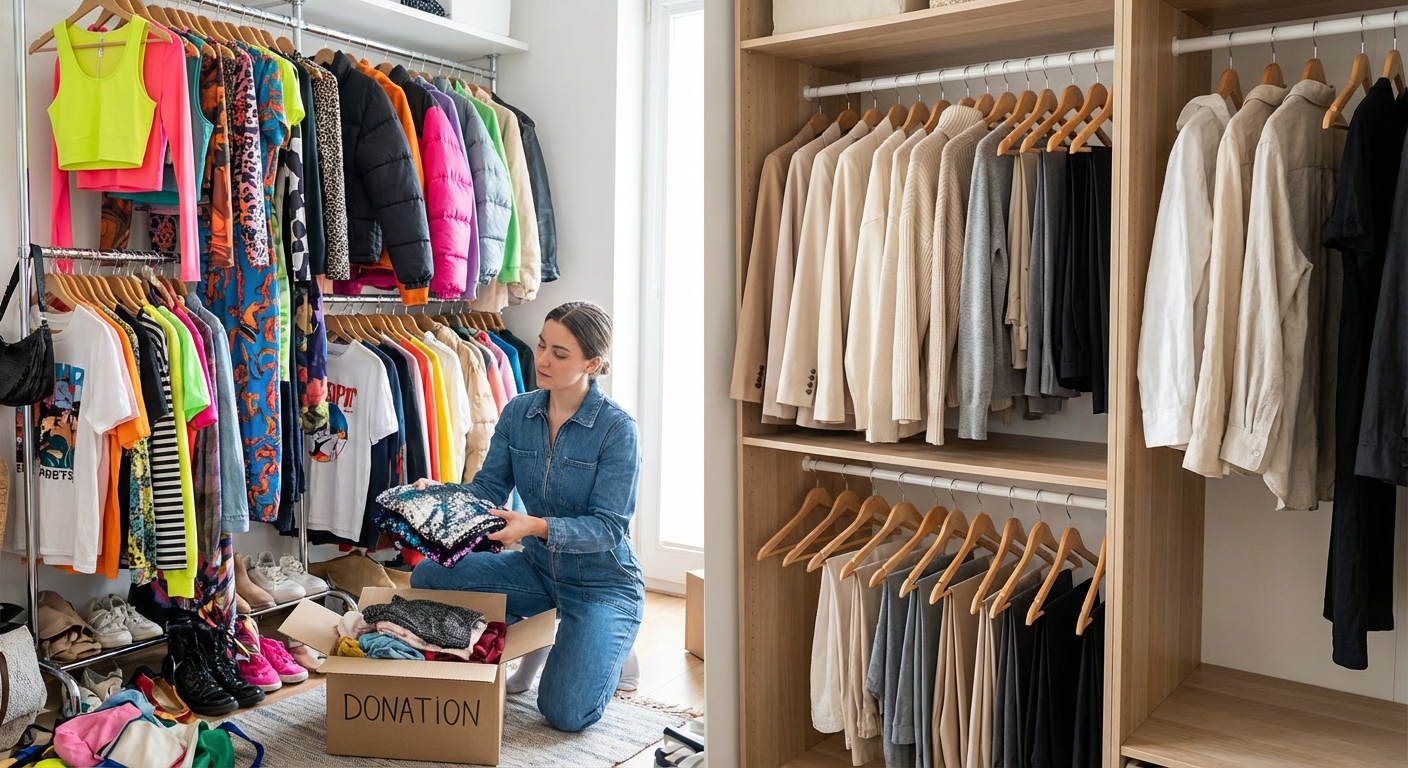
The master wardrobe isn’t about throwing everything away; it’s an ongoing edit.
Quarterly Closet Review
Once a season:
- Pull everything you haven’t worn in 3+ months (season-adjusted).
- Ask: Is it fit, fabric, or fear (of damaging a nice piece) keeping you from wearing it?
- Tailor, dye, or restyle before deciding to sell or donate.
Repair and alteration are trending: Google searches for “clothing alterations near me” have risen steadily since 2022, and brands like Uniqlo and Levi’s now spotlight in-store repair.
Why This Trend Matters for Fashion’s Future
1. It Rewards Brands With Depth, Not Just Virality
Brands offering consistent silhouettes and quality (like The Row, Aritzia, Sézane, COS) are thriving in the wardrobe-edit era. Consumers are becoming loyal to cuts and fits, not just logos.
2. Influencers Are Becoming Long-Term Stylists
The creators winning in 2025 are less about shock-value fits and more about repeatable frameworks. Think:
- “One blazer, 10 outfits” videos.
- “If you like X aesthetic, these 6 pieces will build it.”
3. Resale and Rental Will Be Normalized Layers
As master wardrobes tighten, “guest pieces” for special occasions will increasingly come from rental platforms, while past-mistake buys fuel the resale economy.
Thredup forecasts the global secondhand market to nearly double by 2028, reaching $350B.
Predictions: Where Wardrobe Editing Goes Next
- AI-assisted closets: apps that analyze your existing wardrobe and suggest outfits and gaps.
- Smaller, better stores: fewer SKUs, deeper runs in core staples.
- Micro-wardrobes by activity: travel, office, nightlife—each with a compact, highly planned selection.
Fashion is no longer about constantly becoming someone new—it’s about refining who you already are. For style maximalists, the challenge of this decade isn’t collecting aesthetics; it’s mastering your own.