What Exactly Is the Soft Life?
The soft life started as a Nigerian social media phrase — “soft life, no stress” — and has since become a global cultural shorthand for ease, emotional safety, and opting out of grind culture.
On TikTok and Instagram, #softlife content spans:
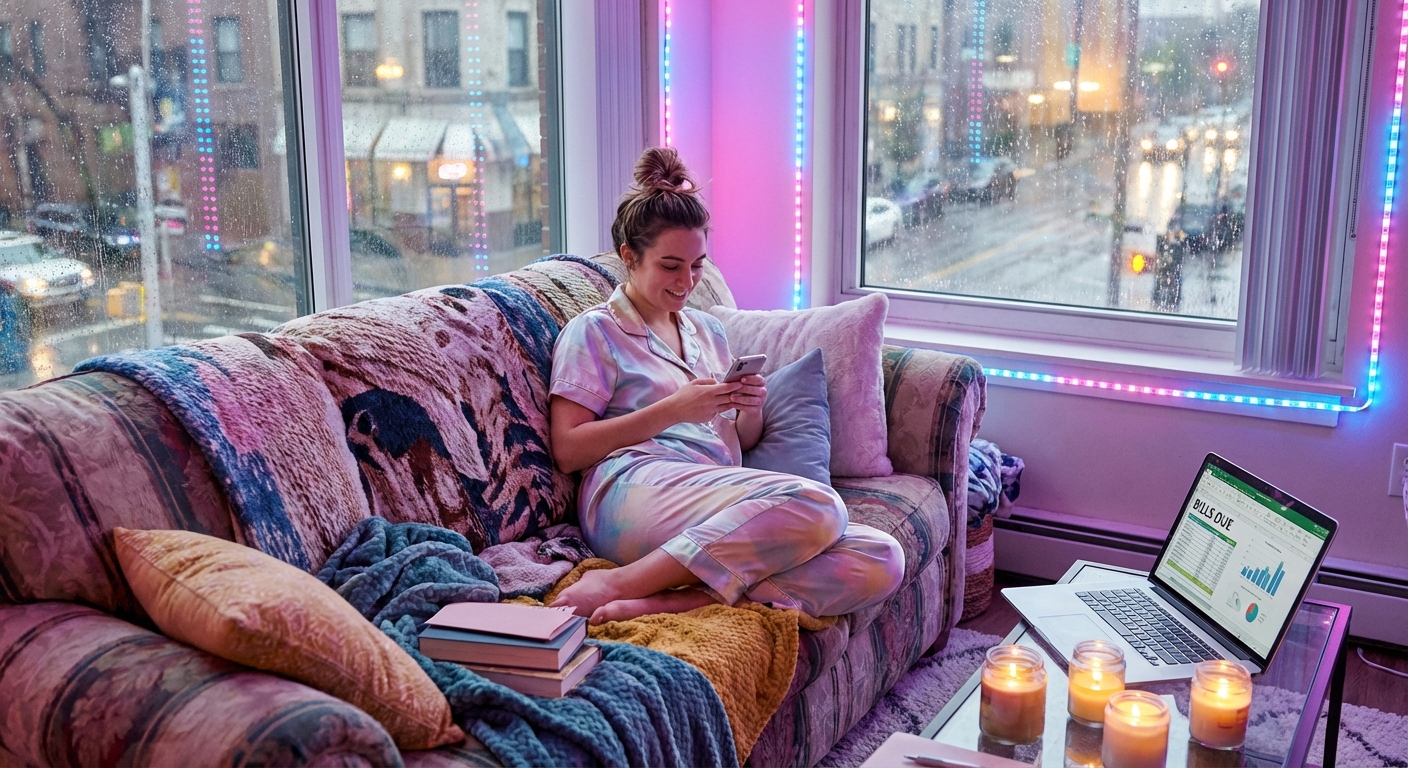
- Slow mornings with matcha and sunlight.
- Skincare routines and carefully curated loungewear.
- Boundaries at work, no-notification weekends, and therapy talk.
The hashtag #softlife passed 5 billion views on TikTok in 2024, with most engagement coming from women and queer creators in their 20s and early 30s. At first glance, it can look like just another aesthetic — all silk pillowcases and beige interiors. Underneath, it reflects how a generation is processing burnout, inflation, and political instability.
A Rebellion Against Hustle Worship
The 2010s were dominated by hustle culture: #Girlboss memoirs, tech-grind mythology, 5 a.m. club productivity porn. That aesthetic now reads as cringe.
A 2023 Deloitte survey found:
- 46% of Gen Z and 38% of Millennials feel burnout "most of the time."
- 40% of Gen Z say they would leave a job that negatively affects their mental health even without another role lined up.
The soft life is a direct counter-move:
> "Instead of optimizing every minute, the soft life prioritizes margin — time, energy, and emotional room to actually exist," says culture analyst Kemi Oduro.
The shift is visible across pop culture:
- TV and film leaning into cozy, slow-paced stories (think Heartstopper or comfort rewatches like Gilmore Girls and Avatar: The Last Airbender dominating streaming data).
- Music mood playlists labeled “soft girl autumn,” “healing era,” and “main character in recovery.”
Soft Doesn’t Mean Passive
Critics sometimes paint the soft life as escapist or apolitical — a privilege-coded fantasy of spa days while the world burns. But for many creators, softness is used as an intentional strategy, not a retreat.
Black feminist thinker Tricia Hersey’s book “Rest Is Resistance” crystallized a key idea: choosing rest in a system that extracts labor aggressively is inherently political.
You see this reflected in:
- Unionization waves among service workers, journalists, and tech employees.
- TikTok creators documenting quitting toxic jobs under hashtags like #quittok and #softlifetransition.
- The rise of “Bare Minimum Mondays” and “Quiet Quitting” as concepts that reject unpaid emotional overperformance.
The soft life reframes success metrics:
- From: title, salary, prestige.
- To: health, autonomy, community, time.
The Aesthetic vs. the Reality
There’s a tension in how the trend is marketed.
Brand feeds often sell soft life as consumption: linen sets, expensive candles, productivity journals, neutral-toned kitchenware. Yet economic reality is harsher:
- In the US, rent-to-income ratios for Gen Z renters in major cities often exceed 35–40%, per Zillow’s 2024 data.
- Globally, young adults report delaying home ownership, children, and even medical care due to cost-of-living pressures.
This gap explains why a newer subtrend — “recession-core soft life” — is gaining traction:
- Secondhand everything, but carefully styled.
- Home spa nights with drugstore products.
- Library hauls instead of bookstore stacks.
Influencer Nissa Kaur, known for her low-budget soft life content, puts it bluntly:
> “If your soft life depends on a $30 candle, it’s not soft — it’s sponsored. Mine is about taking a long walk and not checking work email after 6 p.m.”
Where Mental Health Meets Algorithm
The soft life dovetails with the normalization of therapy, medication, and mental health language online. But it also risks turning healing into yet another performance metric.
A 2023 Pew study found 58% of US teens say they feel pressure to look "perfect" on social media — not just physically, but emotionally: unbothered, thriving, soft.
Psychologist Dr. Saira Malik notes:
> “Soft life content can inspire healthier boundaries, but it can also create a new anxiety: if you’re still struggling, still broke, still tired — are you failing at softness?”
The healthiest iterations emphasize:
- Realistic routines.
- Community-based support (book clubs, mutual aid, skill-sharing).
- Messy progress instead of aesthetic perfection.
How Influencers Are Evolving the Trend
Creators who built early soft life platforms are pivoting from purely aesthetic posts to more structural conversations:
- Breaking down salary negotiations and job-hopping as routes to a softer life.
- Sharing scripts for boundary-setting at work and in relationships.
- Integrating financial literacy — budgeting, sinking funds, and intentional splurging.
You’ll increasingly see “soft life” next to:
- #FinancialFeminism
- #SlowProductivity (inspired by Cal Newport’s frameworks)
- #DigitalDeclutter and tech boundaries
The new message: your life can feel soft even if your furniture doesn’t look like a boutique hotel.
Predictions: The Next Phase of Soft Culture
1. Soft Life, Offline
As content fatigue grows, the next flex might be how little you post.
- Smaller, invite-only group chats and IRL circles instead of public venting.
- Hobby clubs (knitting, ceramics, walking groups) as soft-life anchors.
- Local community gardens, co-ops, and third spaces gaining renewed importance.
2. Soft Masculinity
Softness has been coded largely feminine online, but pop culture is slowly widening that lens:
- Male K-pop idols embracing skincare, pastels, and emotional openness.
- Western celebrities (Timothée Chalamet, Bad Bunny, Harry Styles) normalizing softer styling.
- #SoftBoy and #GentleParenting content recasting masculinity around vulnerability instead of stoicism.
Expect a wave of content around "soft dads," "soft partners," and emotional skill-building for men and masc people.
3. Institutionalized Softness
You’ll also see workplaces and brands attempting to co-opt the trend with:
- "Mental health days" without structural workload change.
- Wellness stipends instead of pay raises.
- On-site meditation rooms with no reassessment of working hours.
Media-literate audiences will increasingly call this out as “performative softness” — aesthetic tweaks without power redistribution.
How to Practice a Soft Life That Actually Works
For trend-conscious readers who want in without the performative trap:
1. Start with boundaries, not purchases.Your first soft-life move might be: no Slack on your phone. Consistent sleep. Saying no once a week.
2. Define your own metrics.What does "ease" mean for you? Less social obligation? More nature? Creative time? Use these as your compass.
3. Keep it community-centered.Energy saved from leaving the grind can be re-invested in mutual care: sharing meals, childcare swaps, co-working with friends.
4. Accept that softness will be uneven.In hard times, a soft life is less a constant state and more a series of moments you protect fiercely.
The Cultural Legacy of Soft Life
As a pop culture movement, the soft life will probably cycle through overexposure, backlash, and rebranding. But the underlying shift it represents — away from glorified burnout and toward sustainability — is likely to endure.
In a timeline defined by crisis, the soft life isn’t just about plush robes and matcha. It’s about a generation quietly asking, What if survival didn’t have to feel like this? And then, in small but significant ways, choosing a different script.