Gendered Fashion Is Quietly Cracking
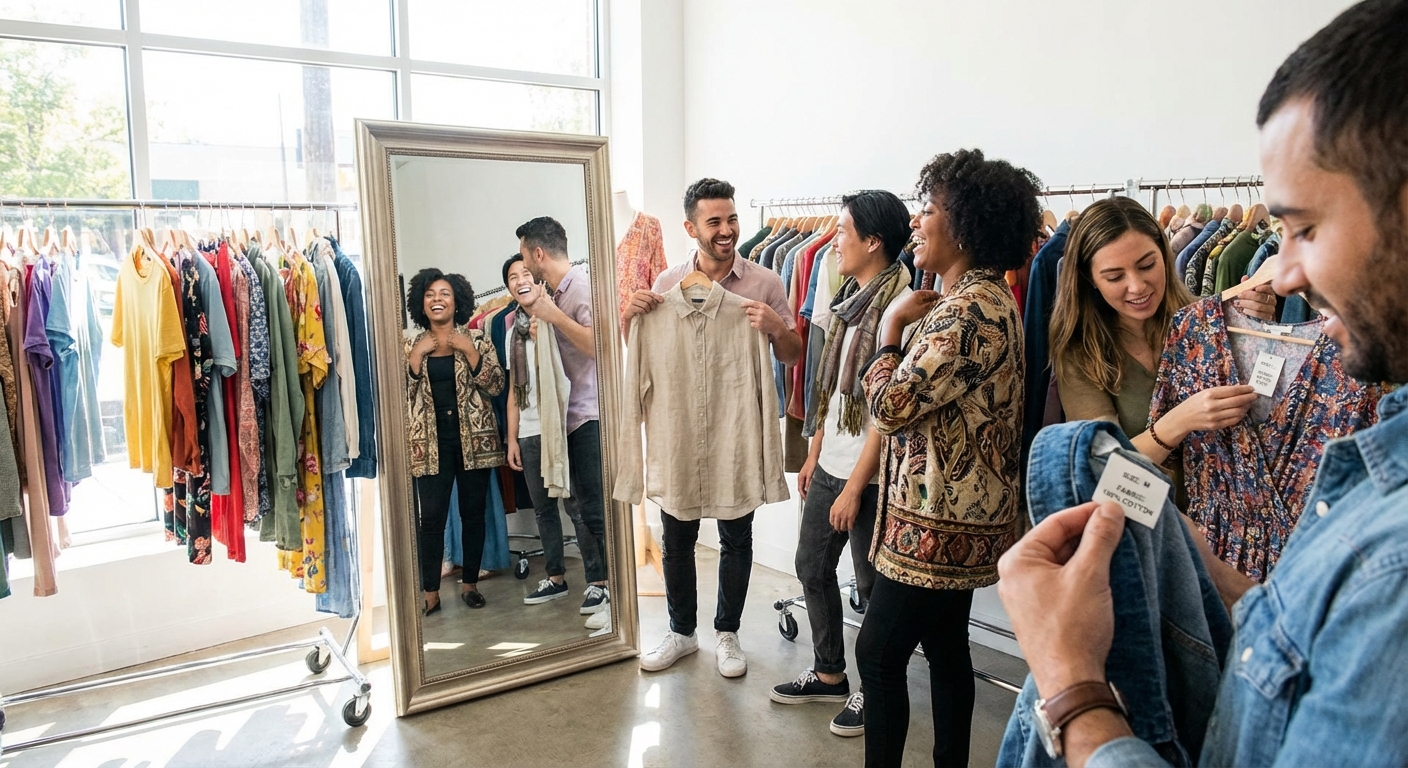
Walk into many new‑school boutiques and you’ll notice something missing: the men’s and women’s sections. Instead, racks are organized by color, fabric, or silhouette. Shirts are just shirts. Trousers are just trousers.
What used to be a radical niche is rapidly mainstreaming: gender‑fluid fashion isn’t just a movement—it’s becoming infrastructure.
A 2023 report from global research firm Ipsos found that 44% of Gen Z globally say they would feel comfortable wearing clothing designed for another gender, and 26% actively seek out gender‑neutral fashion options.
From Statement to Default
For years, fluid dressing was framed as a political or artistic statement—think Prince, Grace Jones, David Bowie. Today, it’s also a practical response to how we actually live and shop.
> “Young consumers are less interested in ‘menswear vs womenswear’ and more in: does it fit, does it feel like me, does it align with my values?” notes trend forecaster Mandy Lee (@oldloserinbrooklyn).
Culture Pushed the Door Open
Key drivers:
- Celebrities: Harry Styles in dresses, Bad Bunny in skirts, Janelle Monáe and Lil Nas X in fluid tailoring.
- Runways: Gucci, Balenciaga, JW Anderson, Marine Serre, and Telfar showing cross-gender styling.
- Media: Vogue covers and red carpets featuring “menswear” on women and “womenswear” on men.
Social platforms amplified it all—hashtags like #genderlessfashion and #whocareswears are growing communities, not just trends.
The Real Shift: Fit and Pattern, Not Just Marketing
Many brands slapped “unisex” on existing items without changing patterns. The result: clothes that technically anyone can wear—but don’t properly fit most bodies.
The next wave of fluid fashion is more serious about pattern-making.
1. Multiple Fits, Shared Design
Instead of “men’s” and “women’s,” some labels now offer:
- Straight cut
- Curved cut (more room in hips/chest)
- Long/short lengths
All in the same design. Denim brand Wildfang and labels like Telfar, Collina Strada, Big Bud Press, and Djerf Avenue are early leaders.
2. Adjustable Architecture
More garments feature:
- Drawstrings, tabs, and toggles.
- Waistbands with built‑in adjustability.
- Button placements that work regardless of chest shape.
This is functionally smarter for everyone, not just non-binary shoppers.
How Shopping Is Being Rebuilt
In-Store Changes
Concept stores and newer chains are:
- Merchandising by aesthetic (minimal, romantic, street) rather than gender.
- Offering all‑gender fitting rooms.
- Training staff on pronouns and non‑gendered language (“What styles do you like?” vs “Men’s or women’s?”).
Brands like Gant, Selfridges (London), and The Phluid Project (NYC) have piloted or adopted genderless spaces and floors.
Online Filters Are Catching Up
E‑commerce interfaces are slowly shifting:
- Filters by silhouette, rise, and inseam instead of only “men/women.”
- Models of varied genders wearing the same garment.
- Sizing described by measurements and fit notes rather than gender only.
A 2024 Deloitte retail report notes that 37% of Gen Z prefer shopping sites that let them filter by fit and style over gender.
Styling in a Gender-Fluid Era: Practical Tips
You don’t need to abandon your current wardrobe to dress more fluidly. Think evolution, not erasure.
1. Start With Silhouettes, Not Categories
Forget “menswear” or “womenswear” for a second. Ask:
- Do I like sharp or soft lines?
- Do I prefer structured or drapey pieces?
- Do I want volume on top, bottom, or both?
Then explore any section of the store that offers those shapes.
2. Hack the Fit With Tailoring
Common adjustments:
- Take in or let out the waist on traditional men’s trousers.
- Shorten sleeves or hems while keeping volume.
- Move buttons to adjust how jackets close across the chest.
A good tailor is a key ally in fluid dressing.
3. Use Accessories to Balance the Vibe
Playing with gender codes can be as simple as:
- Tough boots with a slip dress.
- Pearls with a boxy denim jacket.
- A skinny belt over an oversized shirt.
Creators like Alok V. Menon, Bretman Rock, Emma D’Arcy, and Evan Mock frequently mix codes through accessories, not just clothing.
Data: This Is More Than a Niche
- The Business of Fashion reported in 2023 that searches for “unisex fashion” and “gender-neutral clothing” grew over 150% in three years.
- Market research firm Euromonitor predicts the global unisex apparel market could reach $3.2B by 2028, growing notably faster than traditional gendered segments in certain regions.
- A 2024 YouGov survey found that 38% of Gen Z in the US agree with the statement: “Clothing should not be marketed by gender.”
Industry Challenges & Critiques
Fluid fashion is far from perfect.
1. Tokenism and Thin Sizing
Many genderless lines still:
- Stop around size L or XL.
- Feature thin, androgynous models only.
This equates “genderless” with one very narrow body type, excluding many trans, non-binary, and plus-size shoppers.
2. Price and Access
A lot of the most talked-about gender-fluid brands are mid- to high-end. Mass-market adoption is slower, though chains like H&M, Zara, and Uniqlo are experimenting.
3. Culture vs Commerce
There’s a tension between genuine inclusivity and capitalizing on queer aesthetics for Pride month campaigns without year‑round support.
Writer Alok V. Menon has called out “rainbow capitalism” and emphasized that true gender freedom must include safety, not just shopping options.
Predictions: The Next Phase of Fluid Fashion
1. Measurement-First, Gender-Optional Sizing
Expect more sites and stores to:
- Lead with measurements (waist, hip, chest, torso length).
- Offer optional gender tags only as fit guidance.
2. More Diverse Fit Models
Brands will increasingly show:
- The same garment on different body shapes and genders.
- Rotating product views with multiple models.
This is already happening at Girlfriend Collective, Universal Standard, and some DTC labels.
3. Multi-Use Garments
More pieces will be designed to style multiple ways:
- Wrap tops that tie in different configurations.
- Shirts with removable collars or panels.
- Trousers that snap from wide leg to tapered.
These designs naturally break gender norms because they’re about play and customization.
How to Build a More Fluid Closet—At Your Own Pace
- Raid all sections: Give yourself 30 minutes in a store where you’re allowed to try anything, regardless of label.
- Set one experiment rule: e.g., “One item per season from the ‘other’ side of the store.”
- Listen to your body: Notice when you feel most yourself—confident, relaxed, expressive—and lean into those cuts and fabrics.
Fashion has always been a language of identity. As gender norms loosen, the dictionary gets bigger. Whether you’re non‑binary, cis, trans, or simply curious, fluid fashion offers more tools to say: This is me. On my terms.